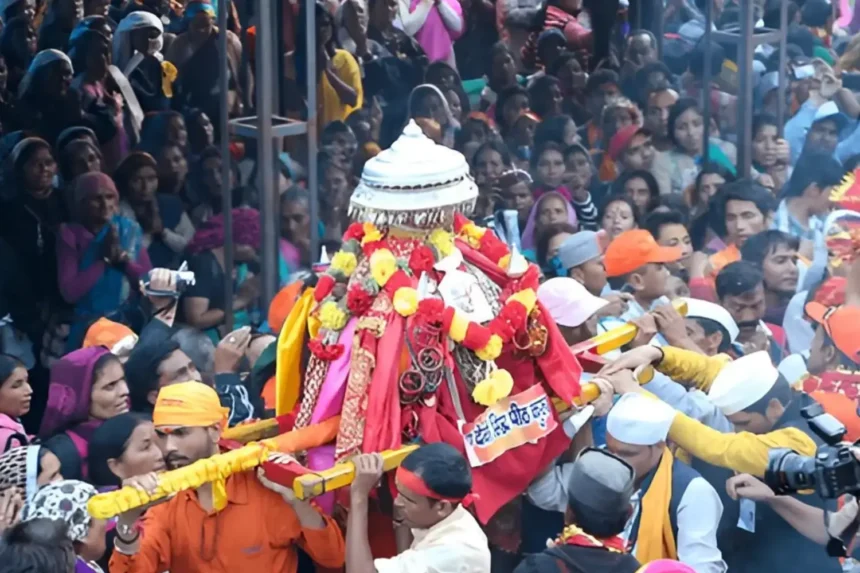
The Nanda Devi Raj Jaat Yatra is one of the most sacred, ancient, and challenging pilgrimages of the Himalayas. Often called the Mahakumbh of Uttarakhand, this divine journey is not just a religious procession but a living tradition that reflects the deep spiritual bond between the people of Uttarakhand and Goddess Nanda Devi.
Organized once every 12 years, the yatra represents faith, endurance, devotion, and the timeless culture of the Himalayan region.
Who Is Goddess Nanda Devi?
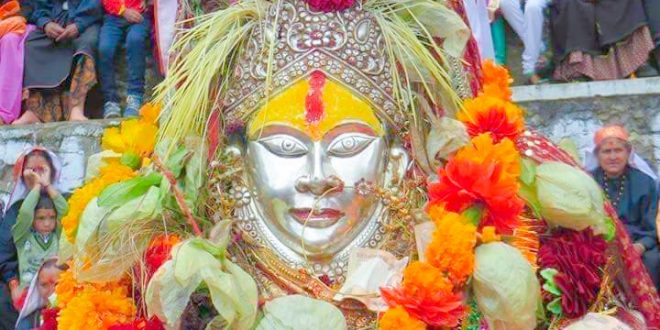
Nanda Devi is revered as the presiding deity of the Garhwal and Kumaon regions of Uttarakhand. She is considered a manifestation of Parvati, the divine consort of Lord Shiva, and is worshipped as the protector of the mountains, forests, and villages.
For the people of Uttarakhand, Nanda Devi is not just a goddess—she is regarded as a daughter, sister, and mother who visits her maternal home during the Raj Jaat.
Historical Background of Nanda Devi Raj Jaat
The history of the Nanda Devi Raj Jaat Yatra dates back over 1,000 years. According to legends, the yatra was initiated by the rulers of the Katyuri dynasty and later systematized by the kings of Garhwal.
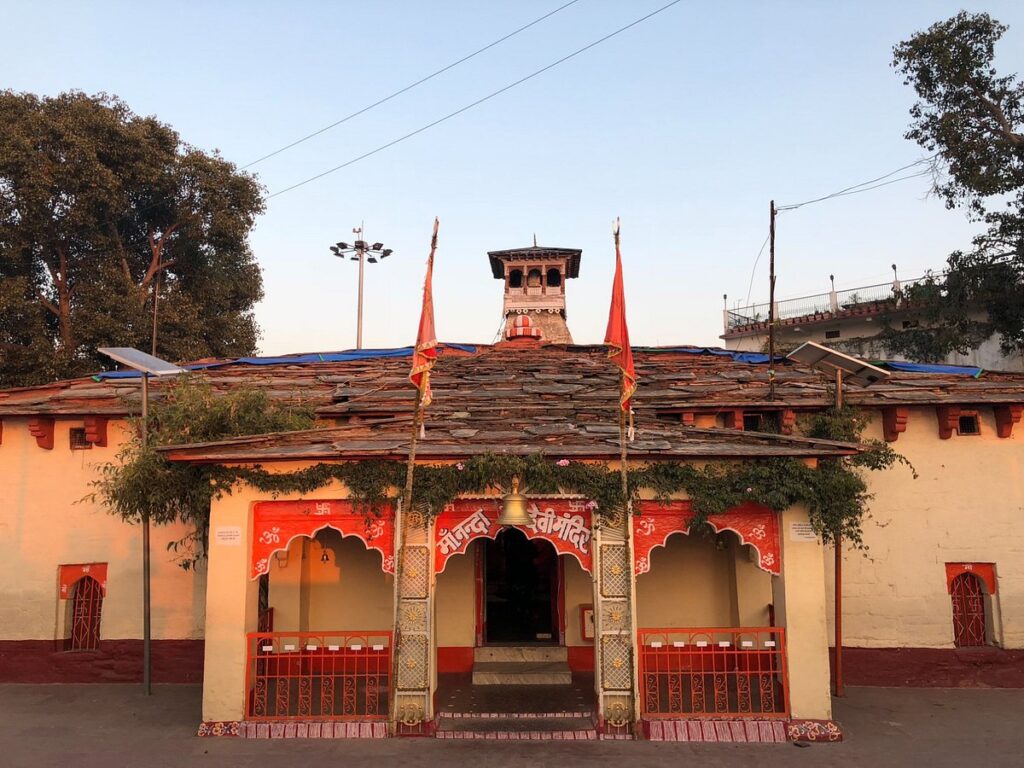
Traditionally, the responsibility of organizing the yatra lies with the Nautiyal Brahmins of Kansuwa village in Chamoli district. The procession begins from Nauti village, considered the maternal home of Goddess Nanda Devi.
The Sacred Route of the Raj Jaat Yatra
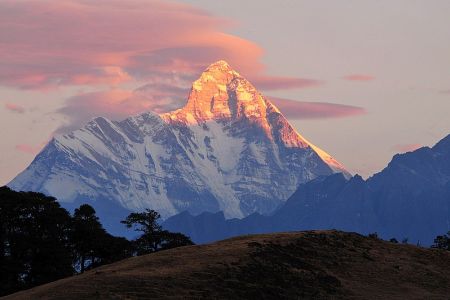
The journey covers nearly 280 kilometers over high-altitude Himalayan terrain and lasts for about 19–21 days. The main route includes:
- Nauti village – Starting point
- Wan village
- Bedni Bugyal
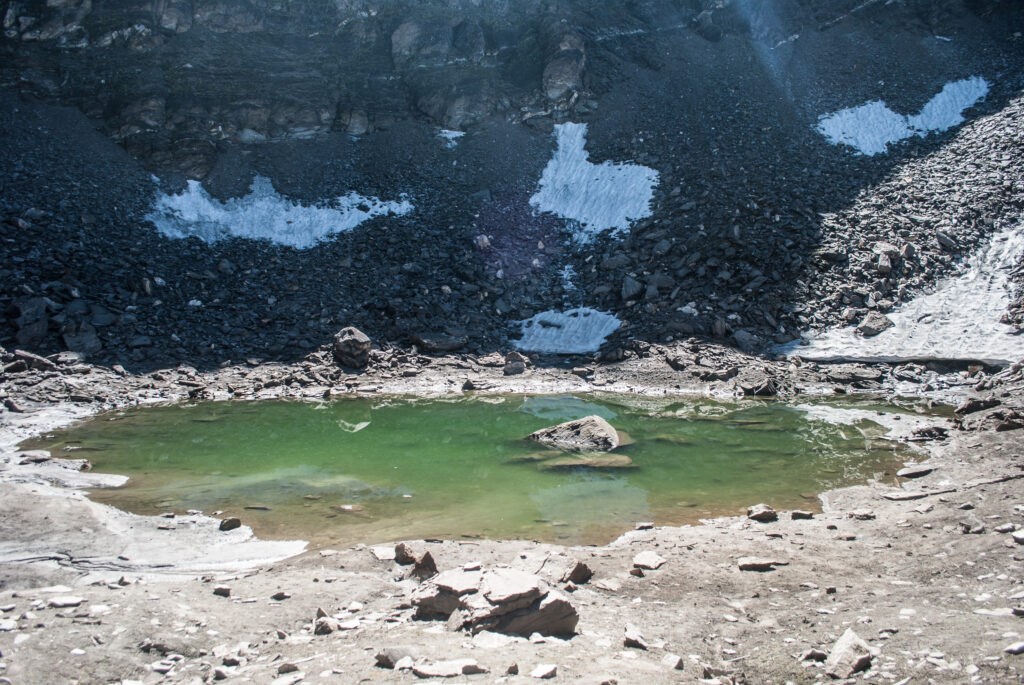
- Roopkund Lake
- Homkund – Final destination
The trek passes through dense forests, alpine meadows, glaciers, and remote Himalayan villages, making it one of the most difficult yet spiritually rewarding yatras in India.
Rituals & Traditions of Nanda Devi Raj Jaat
– Four-Horned Ram (Chausingya Khadu)
A unique and sacred four-horned ram leads the entire yatra. This ram is believed to be chosen by divine will and symbolizes Goddess Nanda Devi herself. No human guides the ram—it walks freely, showing the path.
– Nanda’s Farewell (Bidaai)
The yatra symbolizes the emotional farewell of a daughter returning to her husband’s home (Mount Kailash). This belief makes the journey deeply emotional for devotees, especially women.
– Worship at Bugyals
Special prayers, folk songs, and rituals are performed at high-altitude meadows like Bedni Bugyal, where devotees dance, sing Jagar, and offer prayers to the goddess.
Spiritual & Cultural Significance
The Nanda Devi Raj Jaat Yatra represents:
- Harmony between nature and spirituality
- Preservation of Himalayan culture and folklore
- Community participation across villages
- Deep ecological awareness—nothing is harmed or polluted during the yatra
It is a rare example where faith, environment, and tradition walk together.
Modern Challenges & Preservation
In recent years, climate change, glacier retreat, and increasing footfall have posed challenges to the yatra. The Uttarakhand administration, along with local communities, now focuses on eco-friendly practices, controlled pilgrim numbers, and preservation of ancient rituals without commercialization.
Why Nanda Devi Raj Jaat Yatra Matters Today
In a fast-changing world, the Nanda Devi Raj Jaat Yatra reminds us of humility, endurance, respect for nature, and collective faith. It is not just a pilgrimage—it is the spiritual heartbeat of Uttarakhand.
read more- Why Uttarakhand is called the land of god “Devbhoomi”?