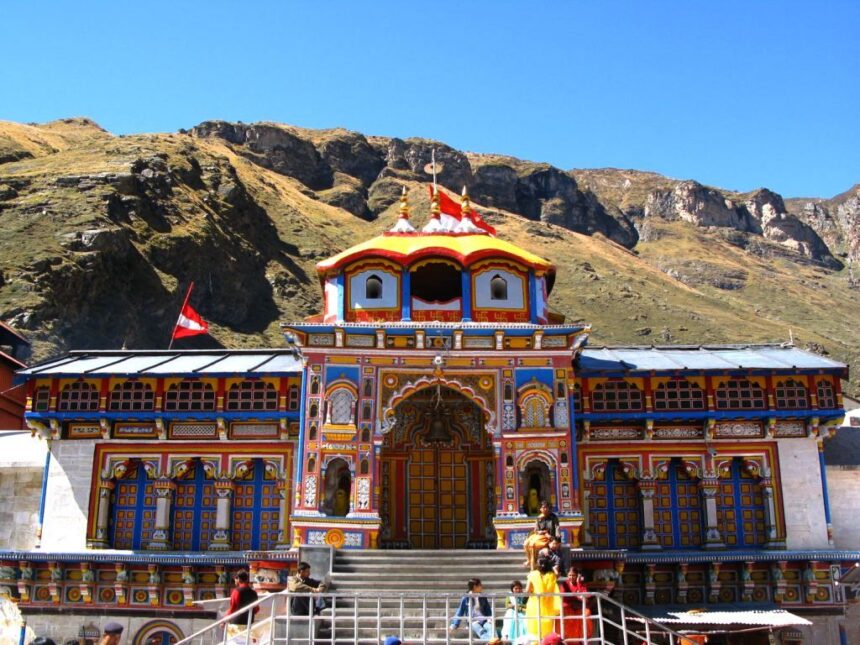
Badrinath Temple is one of the holiest Hindu shrines, located in the Chamoli district of Uttarakhand, nestled in the Garhwal Himalayas along the banks of the Alaknanda River. Dedicated to Lord Vishnu, this sacred temple is a key part of the Char Dham Yatra, which also includes Kedarnath, Gangotri, and Yamunotri. Every year, lakhs of devotees visit Badrinath Dham seeking spiritual peace, salvation, and divine blessings.
History of Badrinath Temple
The history of Badrinath Temple dates back to ancient times. According to religious beliefs, Adi Shankaracharya rediscovered and re-established the temple in the 8th century. It is believed that Lord Vishnu meditated here under a Badri (berry) tree, giving the place its name—Badrinath.
The temple has been mentioned in several Hindu scriptures, including the Vishnu Purana, Skanda Purana, and Mahabharata, highlighting its immense spiritual importance.
Religious Significance
Badrinath Dham is revered as one of the 108 Divya Desams of Lord Vishnu. The presiding deity, Badri Narayan, is worshipped in a black stone idol.
Some important beliefs associated with Badrinath Temple include:
- A visit to Badrinath washes away sins and leads to moksha (salvation)
- The temple is closely linked with Nar-Narayan, the twin incarnations of Vishnu
- Nearby sacred sites like Tapt Kund, Mana Village, and Vasudhara Falls enhance its spiritual aura
Architecture of Badrinath Temple
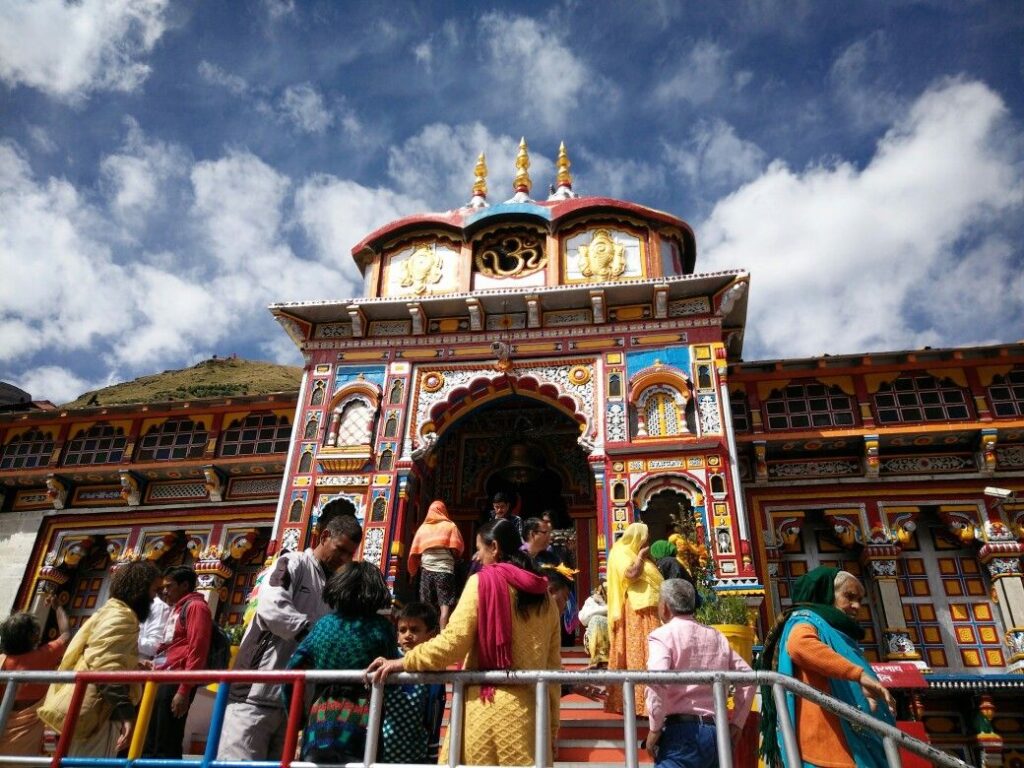
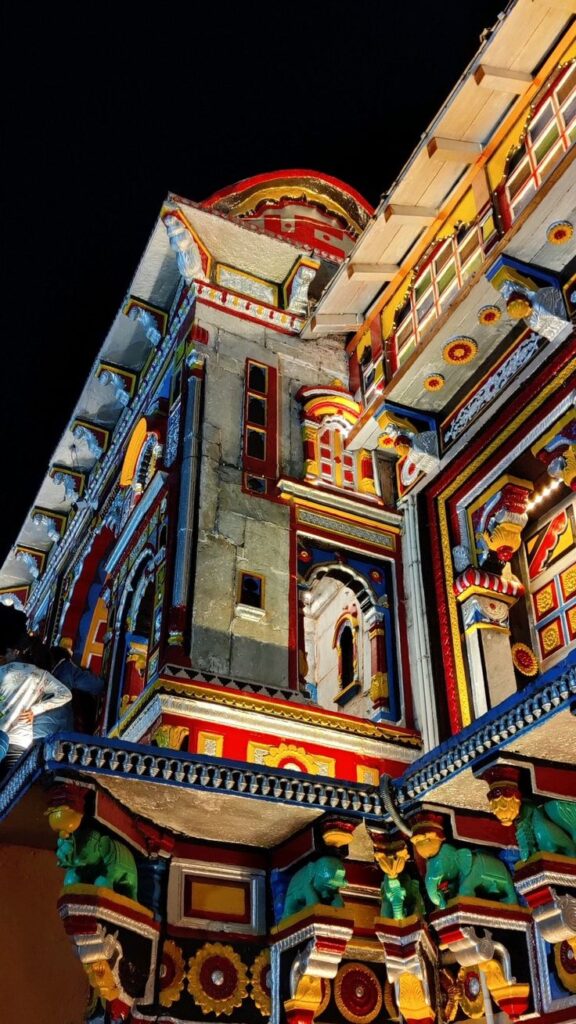
The architecture of Badrinath Temple reflects traditional North Indian temple style. The brightly painted façade, golden cupola, and intricate carvings make it visually striking.
The temple complex includes:
- Garbh Griha (sanctum) housing Badri Narayan
- Mandap where devotees gather for prayers
- Tapt Kund, a natural hot water spring where pilgrims take a holy bath before darshan
Best Time to Visit Badrinath
The best time to visit Badrinath Temple is between May and June and September to October.
- The temple remains closed during winter due to heavy snowfall
- During winters, the idol is shifted to Joshimath for worship
- Avoid peak monsoon months due to landslides and roadblocks
How to Reach Badrinath Temple
By Road: Well connected via Rishikesh, Haridwar, and Joshimath
By Rail: Nearest railway station – Haridwar / Rishikesh
By Air: Nearest airport – Jolly Grant Airport, Dehradun
Regular buses and taxis are available during the Char Dham Yatra season.
Places to Visit Near Badrinath
- Mana Village – India’s last village near the Tibet border
- Vasudhara Falls – Scenic waterfall near Mana
- Mata Murti Temple – Dedicated to the mother of Lord Narayan
- Bheem Pul – Mythological bridge linked to Mahabharata
read more- Know about the biggest celebration of Uttarakhand: the Nanda Devi Raj Jaat Yatra.
Conclusion
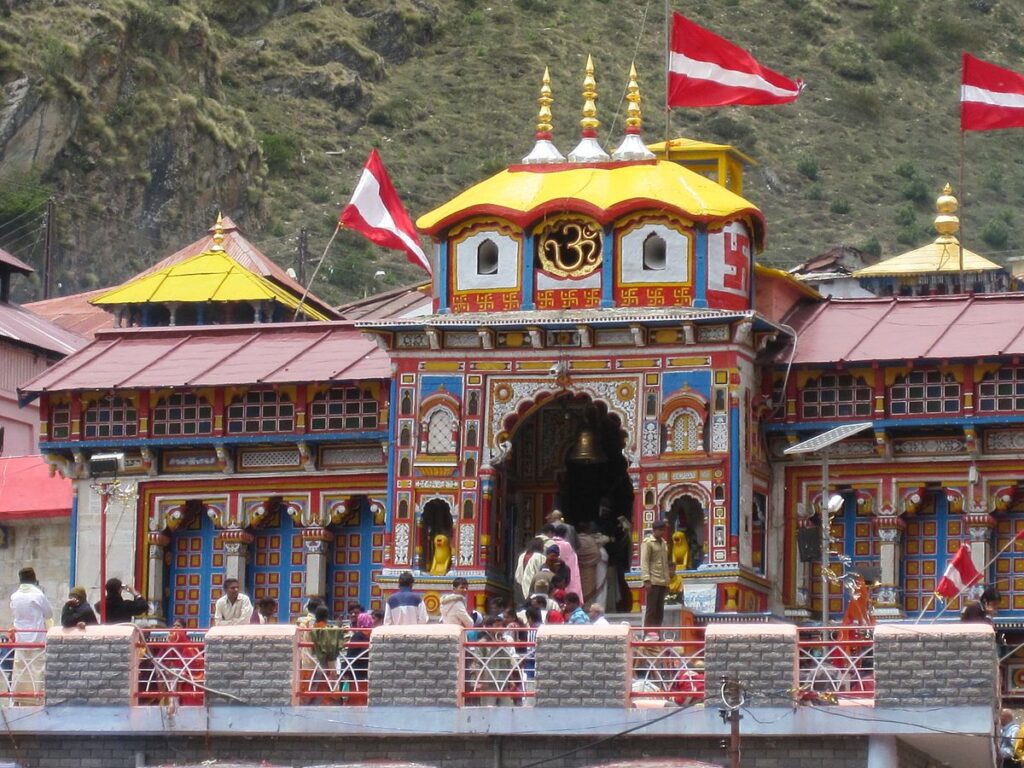
Badrinath Temple is not just a pilgrimage site but a symbol of faith, devotion, and spiritual heritage of Uttarakhand. Surrounded by majestic mountains and divine legends, a visit to Badrinath Dham offers a perfect blend of spirituality, history, and natural beauty. Whether you are a pilgrim or a traveler, Badrinath Temple remains a must-visit destination in Devbhoomi Uttarakhand.
read more- Why Uttarakhand is called the land of god (Devbhoomi)?